

Global Plant-based Meat Alternatives Market
Plant-based Meat Alternatives Market (Source: Soy, Pea, Wheat, Legumes, and Others (Seeds, Blends, etc.); Product Category: Chicken Alternative, Beef Alternative, Seafood Alternative, Pork Alternative, and Others (Turkey, Lamb, etc.); Product Form: Burgers / Patties, Sausages, Strips & Nuggets, Meatballs, Ground Meat, Shreds & Scrambles, and Others (Slices, Cutlets, etc.); Distribution Channel: Food Retail, HORECA (Hotel/Restaurant/Cafe), and Others) – Global Industry Analysis, Shares, Growth, Trends and Forecast 2021-2036
Categories:
All, Food and Consumer Goods
| Format: PDF/PPT/Excel
| Product ID:
4405
| Report Version:
May 2026
- Report Preview
- Table of Content
- Request Customization
Market Snappshot
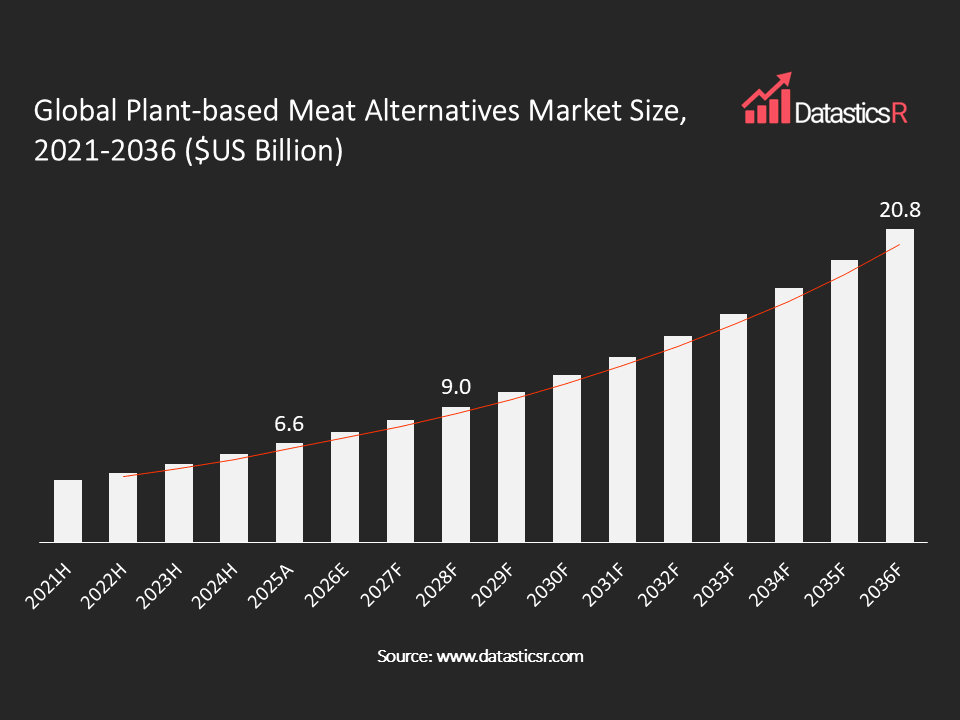
- Market Size in 2025: $US 6.6 Bn
- Forecast Market by 2036: $US 20.8 Bn
- CAGR for the Period 2026-2036: 11%
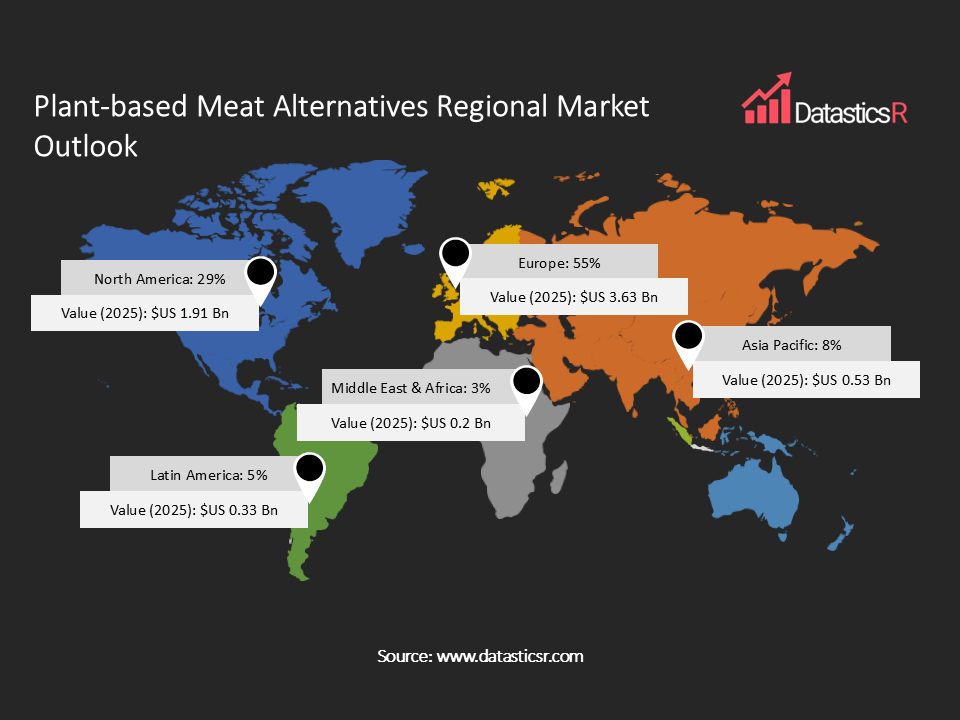
- Top Region in Terms of Market Share: Europe (55%)
- Key Players: Beyond Meat, Field Roast, Conagra Brands (Gardein), Garden Gourmet, Impossible Foods, Kellogg’s (Morningstar), Quorn, Nature´s Richness Holding, Osem Nestle, Heura Foods, MATR Foods, Tyson Foods, Vivera, and Others
Analyst Viewpoint:
The plant-based meat alternative is transitioning beyond its hype phase into a more mature, fundamentals-driven growth cycle; an evolution that is ultimately constructive for investors. The category has progressed from a period of novelty into disciplined commercial execution. Flexitarians now constitute 93% of the plant-based meat consumers in the US, and they all consume meat products as well, which means that this is not a vegan segment but rather one focused on changing consumer preferences within the food segment. Clean label formulations have become a requirement for success, as consumers pay as much attention to ingredients as to nutrition labels. Technologically, the focus is shifting from first generation soy burgers to cleaner labels, better nutrition and extrusion/post processing upgrades that improve texture while controlling cost. In terms of innovations, precision fermentation, high moisture extrusion, and mycoprotein fiber formulations are set to converge in closing the flavor and texture gap with animal proteins. Food service, on the other hand, has shown itself to be the true catalyst for product.
Plant-based Meat Alternatives Market Overview:
Plant-based meats, sometimes referred to as meat analogues or meat substitutes, are products designed to mimic animal-based meat counterparts in flavor, texture, aesthetics, and nutritional composition. Ingredients include proteins from soy, pea, wheat gluten, mycoprotein, fava beans, chickpeas and other sources as well as precision fermentation and mushroom-derived ingredients. Animal agriculture is replaced with alternative protein sources in order to consume protein. Plant-based proteins create 30%-90% less GHG emissions. Institutional food buyers are incorporating ESG goals into their purchasing requirements. Additionally, alternative meats have come a long way from being a niche health food. Certain products on the market today provide more fiber and bioavailable iron than their animal-based counterparts while limiting saturated fats. High moisture extrusion is now the primary method of production versus traditional dry extrusion to create fibrous, meat-like structures. Newer technologies such as wet spinning and shear cell allow for whole-cut analogues such as steak, fillets, and shredded applications. Fermentation is being used to deepen umami flavor profiles as well as reduce any unwanted plant aftertastes. While the technology to create these meats has improved, the cost of production for alt-proteins is still on higher side. With that said, companies in the space are trying to decrease the cost of ingredients by controlling more of the supply chain, developing contract-growing and blending multiple proteins to hit price parity in near future.
| Drivers | Rapid Flexitarian Shift and Meat‑Reduction Behavior Reshaping Demand in Europe, North America and Beyond |
| Foodservice Operators Embedding Plant-Based Proteins Permanently in Core Menus |
Rapid Flexitarian Shift and Meat Reduction Behavior Reshaping Demand in Europe, North America and Beyond
One of the strongest structural enablers is the emergence of flexitarianism and reductionism, especially among consumers in Europe and developed countries. As per current stats, 27% of Europeans are identified as flexitarians, within which Germany and Austria percentages are 40% and 37%, respectively. This means that “less meat” is no longer a niche concept, but a lifestyle option widely adopted by individuals across Europe.
According to another survey on consumers in the US, it has been found that 57% of plant-based meat-eaters are classified as omnivores, whereas only 11% belong to vegetarians, pescatarians, or vegans category. Therefore, it is evident that the target customer is more inclined towards being a flexitarian meat-eater rather than converting entirely into plant-based meat products. From a business perspective, these customers compare plant-based meat products like burgers and sausages on the same basis as traditional animal meat in terms of taste, price, and versatility. In the past ten years, retail sales of plant-based meats have multiplied nearly three times in the US.
Market players benefit from the shift towards flexitarianism in terms of strategies other than those related to meat alternatives alone. For instance, manufacturers of plant-based products such as milk, yogurt, cheese, and meals can offer a package of flexitarian options. Similarly, manufacturers of ingredients can create a protein-based formulation system that could be used in the manufacture of meat, dairy, and meals. This favorable shift in consumer preferences is expected to unlock significant growth opportunities over the forecast period.
According to another survey on consumers in the US, it has been found that 57% of plant-based meat-eaters are classified as omnivores, whereas only 11% belong to vegetarians, pescatarians, or vegans category. Therefore, it is evident that the target customer is more inclined towards being a flexitarian meat-eater rather than converting entirely into plant-based meat products. From a business perspective, these customers compare plant-based meat products like burgers and sausages on the same basis as traditional animal meat in terms of taste, price, and versatility. In the past ten years, retail sales of plant-based meats have multiplied nearly three times in the US.
Market players benefit from the shift towards flexitarianism in terms of strategies other than those related to meat alternatives alone. For instance, manufacturers of plant-based products such as milk, yogurt, cheese, and meals can offer a package of flexitarian options. Similarly, manufacturers of ingredients can create a protein-based formulation system that could be used in the manufacture of meat, dairy, and meals. This favorable shift in consumer preferences is expected to unlock significant growth opportunities over the forecast period.
Foodservice Operators Embedding Plant-Based Proteins Permanently in Core Menus
The single largest factor, which has been overlooked within this industry, is not related to retail shelf expansion but to the permanency of foodservice menus. The fast-food companies showing inclination towards plant-based meat alternatives on their menu, this means that they will need to consider their needs for supply and plan ahead, train employees, and ensure logistics. This difference between promotion and operation has a huge impact on the signal that is being sent to manufacturing companies. Plant-based products are already available permanently in large fast-food chains across North America, Europe, and Asia Pacific, in addition to university canteens, hospitals, airlines, and office cafeterias, due to sustainability initiatives.
Impact-wise, this is huge. Although foodservice represents only a quarter of plant-based meat volume in advanced economies today, it outsizes itself when it comes to trial and repurchase rates. People who sample a plant-based patty through foodservice are more likely to buy one from retailers down the road. Foodservice becomes a way of acquiring consumers rather than merely generating sales. Moreover, chefs using plant-based products are providing instant feedback on the taste profile, which can be integrated into product formulations quicker than regular consumer feedback studies. This is why brands such as Impossible Foods and Beyond Meat have invested heavily in expanding their foodservice sales capabilities.
The trend toward institutional purchasing is growing in Europe & the U.S. This trend moves slowly but provides a very stable driver of demand, one that will be extremely difficult to displace once implemented.
Impact-wise, this is huge. Although foodservice represents only a quarter of plant-based meat volume in advanced economies today, it outsizes itself when it comes to trial and repurchase rates. People who sample a plant-based patty through foodservice are more likely to buy one from retailers down the road. Foodservice becomes a way of acquiring consumers rather than merely generating sales. Moreover, chefs using plant-based products are providing instant feedback on the taste profile, which can be integrated into product formulations quicker than regular consumer feedback studies. This is why brands such as Impossible Foods and Beyond Meat have invested heavily in expanding their foodservice sales capabilities.
The trend toward institutional purchasing is growing in Europe & the U.S. This trend moves slowly but provides a very stable driver of demand, one that will be extremely difficult to displace once implemented.
Plant-based Meat Alternatives Regional Market Outlook:
Europe dominates global market share with 55% in retail sales, reflecting high per‑capita consumption and a structurally larger flexitarian base. Nearly 1/4th of Europeans identifies as flexitarian, with Germany, Austria and the Netherlands showing particularly strong meat‑reduction trends, which translates into strong retail rotation for burgers, mince, and schnitzel‑style products.
North America ranks second in global market, with estimates indicating around 29% of global sales in 2025, supported by strong brand recognition, extensive retail distribution, and entrenched QSR partnerships.
Asia Pacific is a high‑growth region, leveraging long traditions of soy and wheat protein, rapid urbanization, and the rise of modern retail; plant-based milk is already strong across the region, providing a route to cross‑sell meat analogues as price points normalize.
In the Middle East & Africa, demand is emerging through modern grocery, health‑conscious urban consumers, and tourism‑driven foodservice hubs, often focusing on burger, shawarma and kebab analogues positioned as premium Western or fusion concepts, while Latin America is seeing momentum in Brazil, Mexico, and Chile where global and regional brands are partnering with retailers and QSR chains, using plant-based burgers, sausages, and empanada fillings to tap into familiar local dishes while addressing health and sustainability concerns.
North America ranks second in global market, with estimates indicating around 29% of global sales in 2025, supported by strong brand recognition, extensive retail distribution, and entrenched QSR partnerships.
Asia Pacific is a high‑growth region, leveraging long traditions of soy and wheat protein, rapid urbanization, and the rise of modern retail; plant-based milk is already strong across the region, providing a route to cross‑sell meat analogues as price points normalize.
In the Middle East & Africa, demand is emerging through modern grocery, health‑conscious urban consumers, and tourism‑driven foodservice hubs, often focusing on burger, shawarma and kebab analogues positioned as premium Western or fusion concepts, while Latin America is seeing momentum in Brazil, Mexico, and Chile where global and regional brands are partnering with retailers and QSR chains, using plant-based burgers, sausages, and empanada fillings to tap into familiar local dishes while addressing health and sustainability concerns.
Key Companies in Plant-based Meat Alternatives Market:
There are only a few major competitors, such as Beyond Meat, Impossible Foods, etc., who are still driving innovation in the global industry of plant-based meat. On the other hand, there are many other competitors emerging in the mid-level market that are using existing food companies’ (Tyson Foods, Conagra Brands, etc.) wide network of distribution channels to grow rapidly in the market. The early innovators are trying to develop new ingredients and reduce costs of production while the major food companies are concentrating on expanding their reach via retail channels and collaborations with restaurants.
The key players of the market are Beyond Meat, Field Roast, Conagra Brands (Gardein), Garden Gourmet, Impossible Foods, Kellogg’s (Morningstar), Quorn, Nature´s Richness Holding, Osem Nestle, Heura Foods, MATR Foods, Tyson Foods, Vivera, and Others.
The key players of the market are Beyond Meat, Field Roast, Conagra Brands (Gardein), Garden Gourmet, Impossible Foods, Kellogg’s (Morningstar), Quorn, Nature´s Richness Holding, Osem Nestle, Heura Foods, MATR Foods, Tyson Foods, Vivera, and Others.
Key Developments in Plant-based Meat Alternatives Market:
| 1. Grill’d, Beyond Meat partner to launch new plant-based offering: In August 2025, Grill’d collaborated with plant-based meat brand Beyond Meat to launch the latest version of the Beyond Burger, called the Beyond Burger IV. The new fourth-generation Beyond Burger is free from soy, gluten, and GMOs and is now cooked with avocado oil. |
| 2. JBS acquiring The Vegetarian Butcher from Unilever: In March 2025, Vivera, a subsidiary of JBS SA, one of the world’s largest meat processors, is acquiring The Vegetarian Butcher from Unilever. The Vegetarian Butcher sells a variety of plant-based meat alternative applications to retailers and foodservice operators in 55 markets around the world. |
Plant-based Meat Alternatives Market Attributes:
| ATTRIBUTE | DETAILS |
| Market Value, 2025 | $US 6.60 Billion |
| Forecasted Market Value, 2036 | $US 20.80 Billion |
| CAGR (2026-2036) | 11% |
| Analysis Period | 2021-2036 |
| Historic Period | 2021-2024 |
| Base Year | 2025 |
| Forecast Period | 2026-2036 |
| Volume Unit | Ton |
| Value Unit | $US Billion |
| Market Segmentation | By Source
By Product Category
By Product Form
By Distribution Channel
By Region
|
| Companies Profiles |
|
| Customization Request | Available upon request |
1. Introduction
1.1. Report Scope
1.2. Market Segmentations and Definitions
1.3. Geographical Coverage
2. Executive Summary
2.1. Key Facts and Figures
2.2. Trends Impacting the Market
2.3. DatasticsR Growth Opportunity Matrix
3. Market Overview
3.1. Global Plant-based Meat Alternatives Market Analysis and Forecast, 2021-2036
3.1.1. Global Plant-based Meat Alternatives Market Size (Tons)
3.1.2. Global Plant-based Meat Alternatives Market Size ($US Bn)
3.2. Supply-side and Demand-side Trends
3.3. Technology Roadmap and Developments
3.4. Market Dynamics
3.4.1. Drivers
3.4.2. Restraints
3.4.3. Opportunities
3.5. Porter’s Five Forces Analysis
3.6. PESTL Analysis
3.7. Industry SWOT Analysis
3.8. Regulatory Landscape
3.9. Value Chain Analysis
3.9.1. List of Raw Material Suppliers
3.9.2. List of Manufacturing Companies
3.9.3. List of Dealers/Distributors
3.9.4. List of Potential Customers
3.10. Impact of Current Geopolitical Scenario on the Market
4. Technical Analysis
4.1. Product Specification Analysis
4.2. Details of Production Distribution Channel
4.3. Technology Adoption and Emerging Technologies
4.4. R&D Trends and Patents Landscape
4.5. Cost Structure and Profitability Analysis
5. Global Production Output Analysis (Tons), by Region, 2025
5.1. North America
5.2. Europe
5.3. Asia Pacific
5.4. Latin America
5.5. Middle East and Africa
6. Import-export Analysis Volume (Tons) and Value ($US Bn), by Key Country, 2021-2025
7. Price Trend Analysis and Forecasting ($US/Ton), 2021-2036
7.1. Price Trend Analysis and Forecasting, by Product Category
7.2. Price Trend Analysis and Forecasting, by Region
8. Global Plant-based Meat Alternatives Market Analysis and Forecasting (Tons) ($US Bn), by Source, 2021-2036
9. Global Plant-based Meat Alternatives Market Analysis and Forecasting (Tons) ($US Bn), by Product Category, 2021-2036
10. Global Plant-based Meat Alternatives Market Analysis and Forecasting (Tons) ($US Bn), by Product Form, 2021-2036
11. Global Plant-based Meat Alternatives Market Analysis and Forecasting (Tons) ($US Bn), by Distribution Channel, 2021-2036
12. Global Plant-based Meat Alternatives Market Analysis and Forecasting (Tons) ($US Bn), by Region, 2021-2036
13. North America Plant-based Meat Alternatives Market Analysis and Forecasting (Tons) ($US Bn), by Source, 2021-2036
14. North America Plant-based Meat Alternatives Market Analysis and Forecasting (Tons) ($US Bn), by Product Category, 2021-2036
15. North America Plant-based Meat Alternatives Market Analysis and Forecasting (Tons) ($US Bn), by Product Form, 2021-2036
16. North America Plant-based Meat Alternatives Market Analysis and Forecasting (Tons) ($US Bn), by Distribution Channel, 2021-2036
17. U.S. Plant-based Meat Alternatives Market Analysis and Forecasting (Tons) ($US Bn), by Source, 2021-2036
18. U.S. Plant-based Meat Alternatives Market Analysis and Forecasting (Tons) ($US Bn), by Product Category, 2021-2036
19. U.S. Plant-based Meat Alternatives Market Analysis and Forecasting (Tons) ($US Bn), by Product Form, 2021-2036
20. U.S. Plant-based Meat Alternatives Market Analysis and Forecasting (Tons) ($US Bn), by Distribution Channel, 2021-2036
21. Canada Plant-based Meat Alternatives Market Analysis and Forecasting (Tons) ($US Bn), by Source, 2021-2036
22. Canada Plant-based Meat Alternatives Market Analysis and Forecasting (Tons) ($US Bn), by Product Category, 2021-2036
23. Canada Plant-based Meat Alternatives Market Analysis and Forecasting (Tons) ($US Bn), by Product Form, 2021-2036
24. Canada Plant-based Meat Alternatives Market Analysis and Forecasting (Tons) ($US Bn), by Distribution Channel, 2021-2036
25. Europe Plant-based Meat Alternatives Market Analysis and Forecasting (Tons) ($US Bn), by Source, 2021-2036
26. Europe Plant-based Meat Alternatives Market Analysis and Forecasting (Tons) ($US Bn), by Product Category, 2021-2036
27. Europe Plant-based Meat Alternatives Market Analysis and Forecasting (Tons) ($US Bn), by Product Form, 2021-2036
28. Europe Plant-based Meat Alternatives Market Analysis and Forecasting (Tons) ($US Bn), by Distribution Channel, 2021-2036
29. Germany Plant-based Meat Alternatives Market Analysis and Forecasting (Tons) ($US Bn), by Source, 2021-2036
30. Germany Plant-based Meat Alternatives Market Analysis and Forecasting (Tons) ($US Bn), by Product Category, 2021-2036
31. Germany Plant-based Meat Alternatives Market Analysis and Forecasting (Tons) ($US Bn), by Product Form, 2021-2036
32. Germany Plant-based Meat Alternatives Market Analysis and Forecasting (Tons) ($US Bn), by Distribution Channel, 2021-2036
33. Austria Plant-based Meat Alternatives Market Analysis and Forecasting (Tons) ($US Bn), by Source, 2021-2036
34. Austria Plant-based Meat Alternatives Market Analysis and Forecasting (Tons) ($US Bn), by Product Category, 2021-2036
35. Austria Plant-based Meat Alternatives Market Analysis and Forecasting (Tons) ($US Bn), by Product Form, 2021-2036
36. Austria Plant-based Meat Alternatives Market Analysis and Forecasting (Tons) ($US Bn), by Distribution Channel, 2021-2036
37. Netherlands Plant-based Meat Alternatives Market Analysis and Forecasting (Tons) ($US Bn), by Source, 2021-2036
38. Netherlands Plant-based Meat Alternatives Market Analysis and Forecasting (Tons) ($US Bn), by Product Category, 2021-2036
39. Netherlands Plant-based Meat Alternatives Market Analysis and Forecasting (Tons) ($US Bn), by Product Form, 2021-2036
40. Netherlands Plant-based Meat Alternatives Market Analysis and Forecasting (Tons) ($US Bn), by Distribution Channel, 2021-2036
41. U.K. Plant-based Meat Alternatives Market Analysis and Forecasting (Tons) ($US Bn), by Source, 2021-2036
42. U.K. Plant-based Meat Alternatives Market Analysis and Forecasting (Tons) ($US Bn), by Product Category, 2021-2036
43. U.K. Plant-based Meat Alternatives Market Analysis and Forecasting (Tons) ($US Bn), by Product Form, 2021-2036
44. U.K. Plant-based Meat Alternatives Market Analysis and Forecasting (Tons) ($US Bn), by Distribution Channel, 2021-2036
45. France Plant-based Meat Alternatives Market Analysis and Forecasting (Tons) ($US Bn), by Source, 2021-2036
46. France Plant-based Meat Alternatives Market Analysis and Forecasting (Tons) ($US Bn), by Product Category, 2021-2036
47. France Plant-based Meat Alternatives Market Analysis and Forecasting (Tons) ($US Bn), by Product Form, 2021-2036
48. France Plant-based Meat Alternatives Market Analysis and Forecasting (Tons) ($US Bn), by Distribution Channel, 2021-2036
49. Italy Plant-based Meat Alternatives Market Analysis and Forecasting (Tons) ($US Bn), by Source, 2021-2036
50. Italy Plant-based Meat Alternatives Market Analysis and Forecasting (Tons) ($US Bn), by Product Category, 2021-2036
51. Italy Plant-based Meat Alternatives Market Analysis and Forecasting (Tons) ($US Bn), by Product Form, 2021-2036
52. Italy Plant-based Meat Alternatives Market Analysis and Forecasting (Tons) ($US Bn), by Distribution Channel, 2021-2036
53. Spain Plant-based Meat Alternatives Market Analysis and Forecasting (Tons) ($US Bn), by Source, 2021-2036
54. Spain Plant-based Meat Alternatives Market Analysis and Forecasting (Tons) ($US Bn), by Product Category, 2021-2036
55. Spain Plant-based Meat Alternatives Market Analysis and Forecasting (Tons) ($US Bn), by Product Form, 2021-2036
56. Spain Plant-based Meat Alternatives Market Analysis and Forecasting (Tons) ($US Bn), by Distribution Channel, 2021-2036
57. Russia & CIS Plant-based Meat Alternatives Market Analysis and Forecasting (Tons) ($US Bn), by Source, 2021-2036
58. Russia & CIS Plant-based Meat Alternatives Market Analysis and Forecasting (Tons) ($US Bn), by Product Category, 2021-2036
59. Russia & CIS Plant-based Meat Alternatives Market Analysis and Forecasting (Tons) ($US Bn), by Product Form, 2021-2036
60. Russia & CIS Plant-based Meat Alternatives Market Analysis and Forecasting (Tons) ($US Bn), by Distribution Channel, 2021-2036
61. Rest of Europe Plant-based Meat Alternatives Market Analysis and Forecasting (Tons) ($US Bn), by Source, 2021-2036
62. Rest of Europe Plant-based Meat Alternatives Market Analysis and Forecasting (Tons) ($US Bn), by Product Category, 2021-2036
63. Rest of Europe Plant-based Meat Alternatives Market Analysis and Forecasting (Tons) ($US Bn), by Product Form, 2021-2036
64. Rest of Europe Plant-based Meat Alternatives Market Analysis and Forecasting (Tons) ($US Bn), by Distribution Channel, 2021-2036
65. Asia Pacific Plant-based Meat Alternatives Market Analysis and Forecasting (Tons) ($US Bn), by Source, 2021-2036
66. Asia Pacific Plant-based Meat Alternatives Market Analysis and Forecasting (Tons) ($US Bn), by Product Category, 2021-2036
67. Asia Pacific Plant-based Meat Alternatives Market Analysis and Forecasting (Tons) ($US Bn), by Product Form, 2021-2036
68. Asia Pacific Plant-based Meat Alternatives Market Analysis and Forecasting (Tons) ($US Bn), by Distribution Channel, 2021-2036
69. China Plant-based Meat Alternatives Market Analysis and Forecasting (Tons) ($US Bn), by Source, 2021-2036
70. China Plant-based Meat Alternatives Market Analysis and Forecasting (Tons) ($US Bn), by Product Category, 2021-2036
71. China Plant-based Meat Alternatives Market Analysis and Forecasting (Tons) ($US Bn), by Product Form, 2021-2036
72. China Plant-based Meat Alternatives Market Analysis and Forecasting (Tons) ($US Bn), by Distribution Channel, 2021-2036
73. India Plant-based Meat Alternatives Market Analysis and Forecasting (Tons) ($US Bn), by Source, 2021-2036
74. India Plant-based Meat Alternatives Market Analysis and Forecasting (Tons) ($US Bn), by Product Category, 2021-2036
75. India Plant-based Meat Alternatives Market Analysis and Forecasting (Tons) ($US Bn), by Product Form, 2021-2036
76. India Plant-based Meat Alternatives Market Analysis and Forecasting (Tons) ($US Bn), by Distribution Channel, 2021-2036
77. Japan Plant-based Meat Alternatives Market Analysis and Forecasting (Tons) ($US Bn), by Source, 2021-2036
78. Japan Plant-based Meat Alternatives Market Analysis and Forecasting (Tons) ($US Bn), by Product Category, 2021-2036
79. Japan Plant-based Meat Alternatives Market Analysis and Forecasting (Tons) ($US Bn), by Product Form, 2021-2036
80. Japan Plant-based Meat Alternatives Market Analysis and Forecasting (Tons) ($US Bn), by Distribution Channel, 2021-2036
81. South Korea Plant-based Meat Alternatives Market Analysis and Forecasting (Tons) ($US Bn), by Source, 2021-2036
82. South Korea Plant-based Meat Alternatives Market Analysis and Forecasting (Tons) ($US Bn), by Product Category, 2021-2036
83. South Korea Plant-based Meat Alternatives Market Analysis and Forecasting (Tons) ($US Bn), by Product Form, 2021-2036
84. South Korea Plant-based Meat Alternatives Market Analysis and Forecasting (Tons) ($US Bn), by Distribution Channel, 2021-2036
85. Taiwan Plant-based Meat Alternatives Market Analysis and Forecasting (Tons) ($US Bn), by Source, 2021-2036
86. Taiwan Plant-based Meat Alternatives Market Analysis and Forecasting (Tons) ($US Bn), by Product Category, 2021-2036
87. Taiwan Plant-based Meat Alternatives Market Analysis and Forecasting (Tons) ($US Bn), by Product Form, 2021-2036
88. Taiwan Plant-based Meat Alternatives Market Analysis and Forecasting (Tons) ($US Bn), by Distribution Channel, 2021-2036
89. Australia Plant-based Meat Alternatives Market Analysis and Forecasting (Tons) ($US Bn), by Source, 2021-2036
90. Australia Plant-based Meat Alternatives Market Analysis and Forecasting (Tons) ($US Bn), by Product Category, 2021-2036
91. Australia Plant-based Meat Alternatives Market Analysis and Forecasting (Tons) ($US Bn), by Product Form, 2021-2036
92. Australia Plant-based Meat Alternatives Market Analysis and Forecasting (Tons) ($US Bn), by Distribution Channel, 2021-2036
93. ASEAN Plant-based Meat Alternatives Market Analysis and Forecasting (Tons) ($US Bn), by Source, 2021-2036
94. ASEAN Plant-based Meat Alternatives Market Analysis and Forecasting (Tons) ($US Bn), by Product Category, 2021-2036
95. ASEAN Plant-based Meat Alternatives Market Analysis and Forecasting (Tons) ($US Bn), by Product Form, 2021-2036
96. ASEAN Plant-based Meat Alternatives Market Analysis and Forecasting (Tons) ($US Bn), by Distribution Channel, 2021-2036
97. Rest of Asia Pacific Plant-based Meat Alternatives Market Analysis and Forecasting (Tons) ($US Bn), by Source, 2021-2036
98. Rest of Asia Pacific Plant-based Meat Alternatives Market Analysis and Forecasting (Tons) ($US Bn), by Product Category, 2021-2036
99. Rest of Asia Pacific Plant-based Meat Alternatives Market Analysis and Forecasting (Tons) ($US Bn), by Product Form, 2021-2036
100. Rest of Asia Pacific Plant-based Meat Alternatives Market Analysis and Forecasting (Tons) ($US Bn), by Distribution Channel, 2021-2036
101. Latin America Plant-based Meat Alternatives Market Analysis and Forecasting (Tons) ($US Bn), by Source, 2021-2036
102. Latin America Plant-based Meat Alternatives Market Analysis and Forecasting (Tons) ($US Bn), by Product Category, 2021-2036
103. Latin America Plant-based Meat Alternatives Market Analysis and Forecasting (Tons) ($US Bn), by Product Form, 2021-2036
104. Latin America Plant-based Meat Alternatives Market Analysis and Forecasting (Tons) ($US Bn), by Distribution Channel, 2021-2036
105. Brazil Plant-based Meat Alternatives Market Analysis and Forecasting (Tons) ($US Bn), by Source, 2021-2036
106. Brazil Plant-based Meat Alternatives Market Analysis and Forecasting (Tons) ($US Bn), by Product Category, 2021-2036
107. Brazil Plant-based Meat Alternatives Market Analysis and Forecasting (Tons) ($US Bn), by Product Form, 2021-2036
108. Brazil Plant-based Meat Alternatives Market Analysis and Forecasting (Tons) ($US Bn), by Distribution Channel, 2021-2036
109. Mexico Plant-based Meat Alternatives Market Analysis and Forecasting (Tons) ($US Bn), by Source, 2021-2036
110. Mexico Plant-based Meat Alternatives Market Analysis and Forecasting (Tons) ($US Bn), by Product Category, 2021-2036
111. Mexico Plant-based Meat Alternatives Market Analysis and Forecasting (Tons) ($US Bn), by Product Form, 2021-2036
112. Mexico Plant-based Meat Alternatives Market Analysis and Forecasting (Tons) ($US Bn), by Distribution Channel, 2021-2036
113. Chile Plant-based Meat Alternatives Market Analysis and Forecasting (Tons) ($US Bn), by Source, 2021-2036
114. Chile Plant-based Meat Alternatives Market Analysis and Forecasting (Tons) ($US Bn), by Product Category, 2021-2036
115. Chile Plant-based Meat Alternatives Market Analysis and Forecasting (Tons) ($US Bn), by Product Form, 2021-2036
116. Chile Plant-based Meat Alternatives Market Analysis and Forecasting (Tons) ($US Bn), by Distribution Channel, 2021-2036
117. Argentina Plant-based Meat Alternatives Market Analysis and Forecasting (Tons) ($US Bn), by Source, 2021-2036
118. Argentina Plant-based Meat Alternatives Market Analysis and Forecasting (Tons) ($US Bn), by Product Category, 2021-2036
119. Argentina Plant-based Meat Alternatives Market Analysis and Forecasting (Tons) ($US Bn), by Product Form, 2021-2036
120. Argentina Plant-based Meat Alternatives Market Analysis and Forecasting (Tons) ($US Bn), by Distribution Channel, 2021-2036
121. Rest of Latin America Plant-based Meat Alternatives Market Analysis and Forecasting (Tons) ($US Bn), by Source, 2021-2036
122. Rest of Latin America Plant-based Meat Alternatives Market Analysis and Forecasting (Tons) ($US Bn), by Product Category, 2021-2036
123. Rest of Latin America Plant-based Meat Alternatives Market Analysis and Forecasting (Tons) ($US Bn), by Product Form, 2021-2036
124. Rest of Latin America Plant-based Meat Alternatives Market Analysis and Forecasting (Tons) ($US Bn), by Distribution Channel, 2021-2036
125. Middle East & Africa Plant-based Meat Alternatives Market Analysis and Forecasting (Tons) ($US Bn), by Source, 2021-2036
126. Middle East & Africa Plant-based Meat Alternatives Market Analysis and Forecasting (Tons) ($US Bn), by Product Category, 2021-2036
127. Middle East & Africa Plant-based Meat Alternatives Market Analysis and Forecasting (Tons) ($US Bn), by Product Form, 2021-2036
128. Middle East & Africa Plant-based Meat Alternatives Market Analysis and Forecasting (Tons) ($US Bn), by Distribution Channel, 2021-2036
129. Saudi Arabia Plant-based Meat Alternatives Market Analysis and Forecasting (Tons) ($US Bn), by Source, 2021-2036
130. Saudi Arabia Plant-based Meat Alternatives Market Analysis and Forecasting (Tons) ($US Bn), by Product Category, 2021-2036
131. Saudi Arabia Plant-based Meat Alternatives Market Analysis and Forecasting (Tons) ($US Bn), by Product Form, 2021-2036
132. Saudi Arabia Plant-based Meat Alternatives Market Analysis and Forecasting (Tons) ($US Bn), by Distribution Channel, 2021-2036
133. UAE Plant-based Meat Alternatives Market Analysis and Forecasting (Tons) ($US Bn), by Source, 2021-2036
134. UAE Plant-based Meat Alternatives Market Analysis and Forecasting (Tons) ($US Bn), by Product Category, 2021-2036
135. UAE Plant-based Meat Alternatives Market Analysis and Forecasting (Tons) ($US Bn), by Product Form, 2021-2036
136. UAE Plant-based Meat Alternatives Market Analysis and Forecasting (Tons) ($US Bn), by Distribution Channel, 2021-2036
137. South Africa Plant-based Meat Alternatives Market Analysis and Forecasting (Tons) ($US Bn), by Source, 2021-2036
138. South Africa Plant-based Meat Alternatives Market Analysis and Forecasting (Tons) ($US Bn), by Product Category, 2021-2036
139. South Africa Plant-based Meat Alternatives Market Analysis and Forecasting (Tons) ($US Bn), by Product Form, 2021-2036
140. South Africa Plant-based Meat Alternatives Market Analysis and Forecasting (Tons) ($US Bn), by Distribution Channel, 2021-2036
141. Rest of Middle East & Africa Plant-based Meat Alternatives Market Analysis and Forecasting (Tons) ($US Bn), by Source, 2021-2036
142. Rest of Middle East & Africa Plant-based Meat Alternatives Market Analysis and Forecasting (Tons) ($US Bn), by Product Category, 2021-2036
143. Rest of Middle East & Africa Plant-based Meat Alternatives Market Analysis and Forecasting (Tons) ($US Bn), by Product Form, 2021-2036
144. Rest of Middle East & Africa Plant-based Meat Alternatives Market Analysis and Forecasting (Tons) ($US Bn), by Distribution Channel, 2021-2036
145. Competition Landscape
145.1. Market Share Analysis (%), by Company, 2025
145.2. Competitive Benchmarking
145.3. Company Profiles
145.3.1. Beyond Meat
145.3.1.1. Company Overview
145.3.1.2. Product Portfolio
145.3.1.3. Financials
145.3.1.4. Geographical Footprint
145.3.1.5. SWOT Analysis
145.3.1.6. Recent Developments and Strategies
145.3.2. Field Roast
145.3.2.1. Company Overview
145.3.2.2. Product Portfolio
145.3.2.3. Financials
145.3.2.4. Geographical Footprint
145.3.2.5. SWOT Analysis
145.3.2.6. Recent Developments and Strategies
145.3.3. Conagra Brands (Gardein)
145.3.3.1. Company Overview
145.3.3.2. Product Portfolio
145.3.3.3. Financials
145.3.3.4. Geographical Footprint
145.3.3.5. SWOT Analysis
145.3.3.6. Recent Developments and Strategies
145.3.4. Garden Gourmet
145.3.4.1. Company Overview
145.3.4.2. Product Portfolio
145.3.4.3. Financials
145.3.4.4. Geographical Footprint
145.3.4.5. SWOT Analysis
145.3.4.6. Recent Developments and Strategies
145.3.5. Impossible Foods
145.3.5.1. Company Overview
145.3.5.2. Product Portfolio
145.3.5.3. Financials
145.3.5.4. Geographical Footprint
145.3.5.5. SWOT Analysis
145.3.5.6. Recent Developments and Strategies
145.3.6. Kellogg’s (Morningstar)
145.3.6.1. Company Overview
145.3.6.2. Product Portfolio
145.3.6.3. Financials
145.3.6.4. Geographical Footprint
145.3.6.5. SWOT Analysis
145.3.6.6. Recent Developments and Strategies
145.3.7. Quorn
145.3.7.1. Company Overview
145.3.7.2. Product Portfolio
145.3.7.3. Financials
145.3.7.4. Geographical Footprint
145.3.7.5. SWOT Analysis
145.3.7.6. Recent Developments and Strategies
145.3.8. Nature´s Richness Holding GmbH
145.3.8.1. Company Overview
145.3.8.2. Product Portfolio
145.3.8.3. Financials
145.3.8.4. Geographical Footprint
145.3.8.5. SWOT Analysis
145.3.8.6. Recent Developments and Strategies
145.3.9. Osem Nestle
145.3.9.1. Company Overview
145.3.9.2. Product Portfolio
145.3.9.3. Financials
145.3.9.4. Geographical Footprint
145.3.9.5. SWOT Analysis
145.3.9.6. Recent Developments and Strategies
145.3.10. Heura Foods
145.3.10.1. Company Overview
145.3.10.2. Product Portfolio
145.3.10.3. Financials
145.3.10.4. Geographical Footprint
145.3.10.5. SWOT Analysis
145.3.10.6. Recent Developments and Strategies
145.3.11. MATR Foods
145.3.11.1. Company Overview
145.3.11.2. Product Portfolio
145.3.11.3. Financials
145.3.11.4. Geographical Footprint
145.3.11.5. SWOT Analysis
145.3.11.6. Recent Developments and Strategies
145.3.12. Tyson Foods
145.3.12.1. Company Overview
145.3.12.2. Product Portfolio
145.3.12.3. Financials
145.3.12.4. Geographical Footprint
145.3.12.5. SWOT Analysis
145.3.12.6. Recent Developments and Strategies
145.3.13. Vivera
145.3.13.1. Company Overview
145.3.13.2. Product Portfolio
145.3.13.3. Financials
145.3.13.4. Geographical Footprint
145.3.13.5. SWOT Analysis
145.3.13.6. Recent Developments and Strategies
145.3.14. Others
146. Appendix
- Get Started -
Get insights that lead to new growth opportunities
- Talk to Experts -
Get answers to your queries on this report from our experts
Frequently Asked Questions
The global Plant-based Meat Alternatives market in 2025 was $US 6.60 Billion.
The global Plant-based Meat Alternatives market will be $US 20.80 Billion by 2036.
The expected growth rate (CAGR%) of the global Plant-based Meat Alternatives market is 11% for the period 2026-2036.
Rapid flexitarian shift and meat reduction behavior reshaping demand in Europe, North America and beyond. And Foodservice operators embedding plant-based proteins permanently in core menus.
Plant-based Beef Alternative was the largest consuming segment among all in Plant-based Meat Alternatives Market in 2025.
Europe was the leading regions for Plant-based Meat Alternatives holding around 55% of the global market in 2025.
Beyond Meat, Field Roast, Conagra Brands (Gardein), Garden Gourmet, Impossible Foods, Kellogg’s (Morningstar), Quorn, Nature´s Richness Holding, Osem Nestle, Heura Foods, MATR Foods, Tyson Foods, Vivera, and Others.